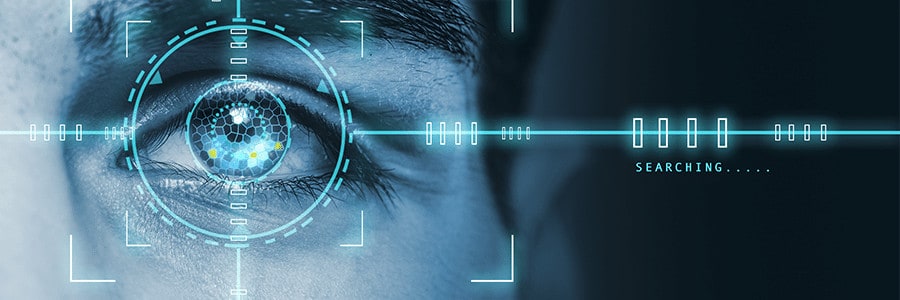
 We’re starting with biometric authentication because it’s a technology that many of us are likely currently using. Biometric authentication is “a security process that relies on the unique biological characteristics of an individual to verify that he is who he says he is.” When many of us think of biometric authentication, we think of advanced retina scanners that the villain uses in a spy movie to protect some top-secret technology. But if you use facial recognition or fingerprint scanning, you’re already using biometric authentication.
The beauty of biometric authentication is its convenience and security. Biometrics are being used for identification because they are unique to each person. We have all been told that our fingerprint is just like a snowflake—completely unique to us. And the ease of unlocking a device with the press of your finger or the turn of your head is refreshing when compared to passwords.
The most common biometric authentication is fingerprint scanning, but there is also finger vein ID, facial recognition, voice identification, and— the spy movie favorite—retina scans and iris recognition. This password-replacing technology is only growing, and we may see it overtake all passwords before long.
We’re starting with biometric authentication because it’s a technology that many of us are likely currently using. Biometric authentication is “a security process that relies on the unique biological characteristics of an individual to verify that he is who he says he is.” When many of us think of biometric authentication, we think of advanced retina scanners that the villain uses in a spy movie to protect some top-secret technology. But if you use facial recognition or fingerprint scanning, you’re already using biometric authentication.
The beauty of biometric authentication is its convenience and security. Biometrics are being used for identification because they are unique to each person. We have all been told that our fingerprint is just like a snowflake—completely unique to us. And the ease of unlocking a device with the press of your finger or the turn of your head is refreshing when compared to passwords.
The most common biometric authentication is fingerprint scanning, but there is also finger vein ID, facial recognition, voice identification, and— the spy movie favorite—retina scans and iris recognition. This password-replacing technology is only growing, and we may see it overtake all passwords before long.
 As we just mentioned, biometric authentication seems promising and is already widely used, but some technology experts believed biometric authentication could be improved upon to create an even more secure solution. So, they created a solution that combined biometric authentication along with other technologies to stop hackers in their tracks. Say hello to FIDO2. FIDO is short for Fast IDentity Online and was created by FIDO Alliance to reduce the use of passwords and continue to improve user security.
FIDO2 consists of cryptographic login credentials that are unique across every website. This replaces the need for usernames and passwords by verifying an individual’s identity to their workstation or network. These cryptographic login credentials are then unlocked by users with passwordless secure options, such as biometric authentication or FIDO security keys, whichever a user or organization prefers. The combination of these technologies creates a security model that eliminates the risks of phishing, all forms of password theft, and replay attacks.
FIDO2 is growing in popularity, with large technology providers such as Microsoft adopting FIDO2 to create ultra-secure and convenient passwordless authentication options for their customers. With its promising use of combining multiple technologies to create a layered security system that is also extremely seamless and easy for users, FIDO2 may be the one to bid passwords their farewell.
As we just mentioned, biometric authentication seems promising and is already widely used, but some technology experts believed biometric authentication could be improved upon to create an even more secure solution. So, they created a solution that combined biometric authentication along with other technologies to stop hackers in their tracks. Say hello to FIDO2. FIDO is short for Fast IDentity Online and was created by FIDO Alliance to reduce the use of passwords and continue to improve user security.
FIDO2 consists of cryptographic login credentials that are unique across every website. This replaces the need for usernames and passwords by verifying an individual’s identity to their workstation or network. These cryptographic login credentials are then unlocked by users with passwordless secure options, such as biometric authentication or FIDO security keys, whichever a user or organization prefers. The combination of these technologies creates a security model that eliminates the risks of phishing, all forms of password theft, and replay attacks.
FIDO2 is growing in popularity, with large technology providers such as Microsoft adopting FIDO2 to create ultra-secure and convenient passwordless authentication options for their customers. With its promising use of combining multiple technologies to create a layered security system that is also extremely seamless and easy for users, FIDO2 may be the one to bid passwords their farewell.
